
Reinforcement guide
GFRP Rebar vs Steel: Key Differences, Advantages and Applications
Published on Feb 2026 . 6 min read
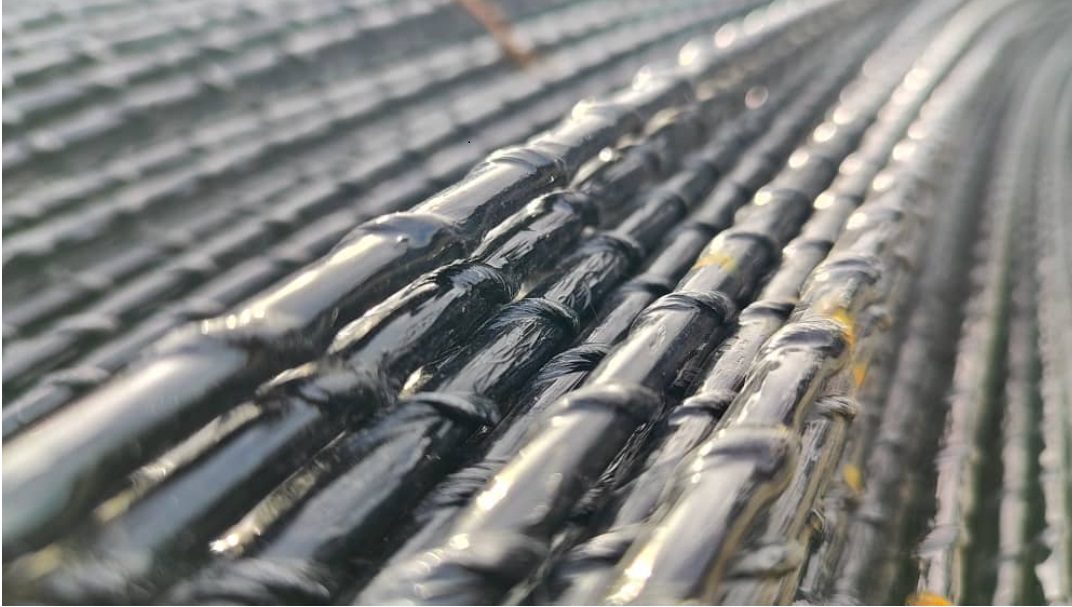
Steel reinforcement has been the standard choice in construction for decades. However, corrosion-related deterioration remains one of the primary causes of structural damage, especially in aggressive environments such as coastal areas, bridges, and water treatment facilities.
Glass Fiber Reinforcement Polymer (GFRP) rebar has emerged as a high-performance alternative, offering corrosion resistance and long-term durability.
In this article, we compare GFRP and steel reinforcement to help engineers, contractors, and project owners make informed decisions.
What is GFRP Rebar?
GFRP rebar is a composite material made from glass fibers embedded in a polymer resin matrix. Unlike traditional steel reinforcement, it does not corrode and offer a high strength-to-weight ratio.
GFRP is widely used in environments where durability and resistance to aggressive conditions are critical.
What is Steel Rebar?
Steel rebar is a widely used reinforcement materials known for its strength, ductility, and availability. It performs well in standard conditions but is highly susceptible to corrosion when exposed to moisture, chlorides, and chemicals.
Corrosion can lead to cracking, spalling, and reduced structural lifespan.
Key Differences between GFRP and Steel
| Property | GFRP Rebar | Steel Rebar |
| Corrosion Resistance | Excellent | Poor |
| Weight | Very Light | Heavy |
| Tensile Strength | High | Moderate |
| Electrical Conductivity | Non-conductive | Conductive |
| Durability | Long-term | Limited in harsh environments |
| Maintenance | Low | High |
Advantages of GFRP Rebar
- Corrosion Resistance
GFRP does not rust, making it ideal for marine and chemical environments. - Lightweight
Up to 4 times lighter than steel, reducing transportation and installation costs. - High Tensile Strength
Provides strong reinforcement performance in demanding applications. - Non-Conductive
Suitable for projects where electromagnetic neutrality is required. - Long Service life
Reduces maintenance and replacement costs over time.
Limitations of GFRP
- Lower modulus of elasticity compared to steel
- Different design considerations required
- Limited awareness in some markets
Applications of GFRP Rebar
GFRP reinforcement is commonly used in:
- Coastal and marine structures
- Bridges and highways
- Water treatment plants
- Industrial facilities
- Structures exposed to de-icing salts
When to Choose GFRP Instead of Steel
GFRP is recommended when:
- Corrosion risk is high
- Long-term durability is critical
- Maintenance access is limited
- Lightweight materials are preferred
Conclusion
While steel remains a widely used reinforcement material, GFRP offers significant advantages in environments where corrosion and long-term performance are major concerns.
Selecting the right materials depends on project requirements, environments conditions, and lifecycle considerations.
Explore our GFRP Rebar solutions designed for corrosion-resistant and long-term reinforcement applications.
Looking for GFRP reinforcement solutions?
Contact our team for technical support and product information, or request a detailed datasheet for your project requirements.